See contract risk while there is still time to act
Key dates, caps, and renewal flags no longer stay buried until something has already gone wrong. You see which contracts are leaking revenue and the specific actions that would recover or protect it, before exposure lands on the books.
The old way is one contract at a time: dates and caps sitting in separate files, pricing that has quietly gone stale, renewals that pass before anyone flags them, and account managers and legal rebuilding the same language by hand. The governed way holds the whole portfolio in one view. Every agreement is read, matched to its client, and scored for health and risk, then reconciled against the billing, service, and regulatory reality it depends on. Teams are pointed at the highest-impact gaps first, so effort protects revenue where it matters most instead of working through the whole stack at once.
Contracts nobody has actually read
Key dates, caps, and renewal flags sit buried in files, so exposure only surfaces when something has already gone wrong.
No single read on portfolio health
Leaders cannot say which clients are protected and which are exposed without pulling documents one at a time.
Revenue leaking through the gaps
Missing protections, stale pricing, and quiet renewals let revenue slip away before anyone notices it was at risk.
Slow, manual drafting and review
Building, negotiating, and signing off on contracts by hand keeps account managers and legal buried in repetitive work.
Our Approach
Know your Obligations
A contract is where the terms of a client relationship are actually set, and most of what matters in it stays invisible until someone opens the file. QortexOS treats the whole portfolio as one connected picture rather than a shelf of separate agreements. Every contract is read as it arrives and tied to the client it belongs to, so the book of business is held together and kept current instead of reviewed one document at a time.
That connected picture is what makes timing possible. Because it stays current as contracts are signed, renewed, and repriced, leaders see where the business stands while there is still room to move rather than after the outcome has landed. A renewal coming due, or a client drifting toward churn, shows up in time to act on rather than after the window has closed, and revenue slipping through a gap arrives with the specific action that would recover or protect it. Effort then lands on the agreements that carry the most exposure, so the work goes to the gaps that matter rather than the whole stack at once.
Read and match every contract
Score the whole portfolio
Draft and negotiate from what worked before
Reconcile against live systems
Act on the highest-impact gaps
One Picture
Every Agreement, Connected to Its Client
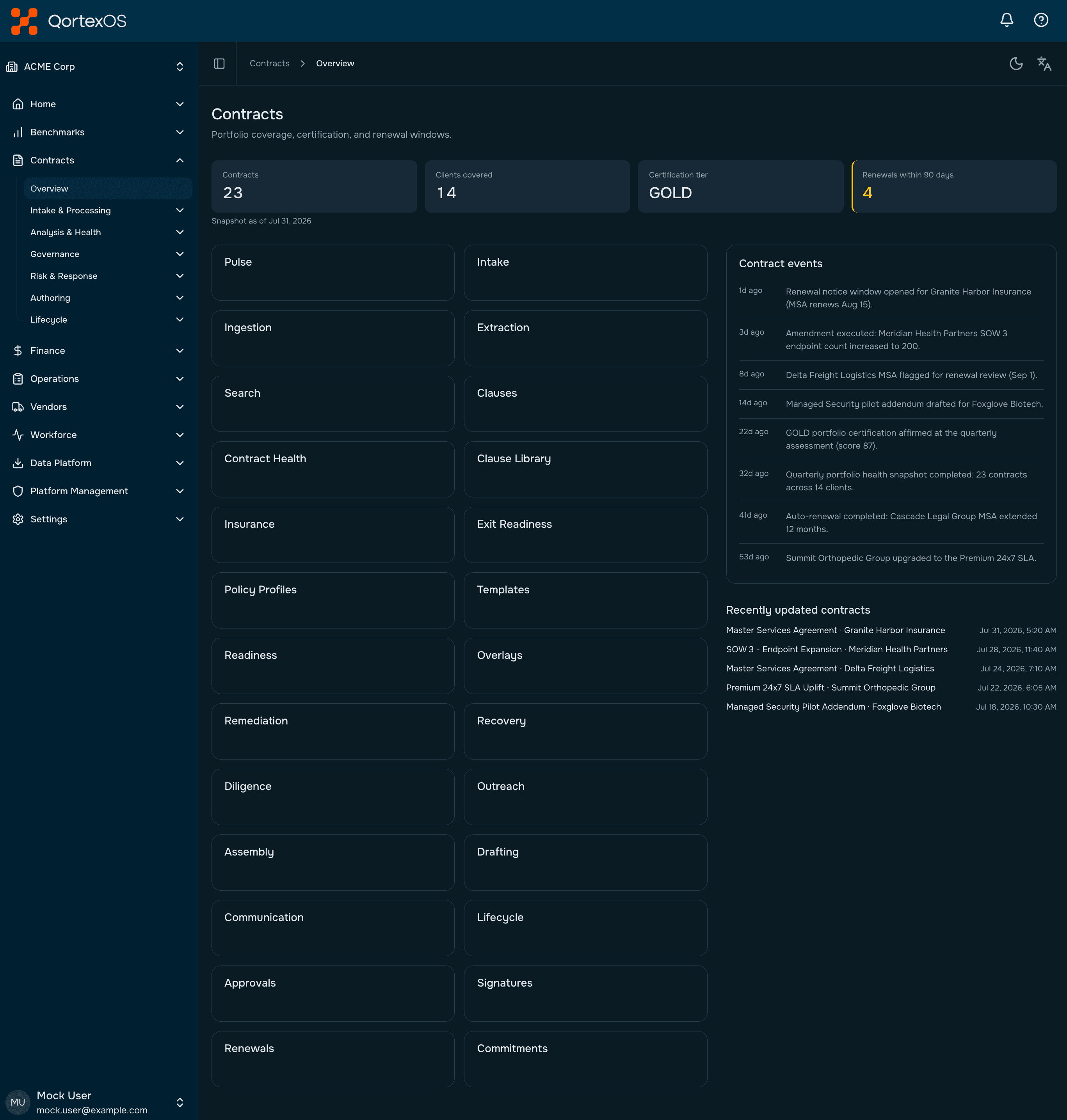
The Whole Contract Book in One Place
Contracts tend to live one file at a time, reviewed only when something forces the question. Here every agreement lands connected to the client it serves and resolves into a single read on health and risk. The obligations, renewal windows, and protections that decide exposure come together in one operating picture, so the contract portfolio stops being a stack of documents and becomes something a leader can see, weigh, and steer.
- Every agreement tied to its client from the start, so none sits reviewed too late
- A single read on health and risk across the book, not one document at a time
- The terms that drive exposure gathered into one operating picture