Make Financial Performance More Predictable
The board-approved budget, a rolling forecast, and closed actuals all line up against the same numbers, so a question about any account in any month returns a single answer you can act on instead of a reconciliation exercise stitched together by hand.
Look across cash, profit, and revenue and see where each is heading early enough to act, all from one connected view of where the business stands. Behind that, the forecast keeps pace with closed actuals rather than a number set months ago, a variance arrives with the cause that opened it, and a live read of financial momentum pairs each headline metric with the action items driving it. The daily work moves from stitching separate sources together to weighing the profit-maximizing set of moves that still fits inside your operating constraints.
The plan drifts from reality by mid-year
A budget approved for January stops matching the business by spring, and by the time anyone reconciles plan against actuals the quarter is already gone.
Three ledgers that never agree
Plan, forecast, and actual live in separate spreadsheets, so answering a simple question about any account and month means stitching three sources together by hand.
Variance without a cause
You can see a gap opened but not why, which turns every review into guesswork about whether the miss was something the team controlled or an outside shock.
Cash and profit surprises arrive too late
Shortfalls and thin-margin accounts show up after the fact, when the room to correct them has already closed.
Our Approach
Looking into the Future
Financial planning here runs as one connected system rather than a stack of separate reports. Plan, forecast, and actual all answer to the same baseline: the board-approved budget is held as the number every later figure is measured against, the rolling forecast keeps pace with each month's close, and both settle against the same actuals. Because the three read against one set of numbers, the books hold together and the operating picture reconciles instead of splitting into versions that disagree.
That coherence is what turns a review into a decision. When a gap opens between plan and actual, you can attribute it to the drivers behind it instead of guessing whether the miss was controllable or an outside shock. The corrective moves you weigh stay current as the figures move, so you are working from where the business stands rather than from a plan set months ago.
Looking forward from numbers that already agree, a coming shortfall or a thin-margin account becomes visible while there is still room to correct it, and the decision gets made while the window is open.
Set a plan of record you can trust
Keep a rolling forecast against closed actuals
Get one answer instead of three ledgers
Attribute variance and close the gap
Look forward across cash, profit, and revenue
Scattered To Clear
From Scattered Work To One Trustworthy Picture
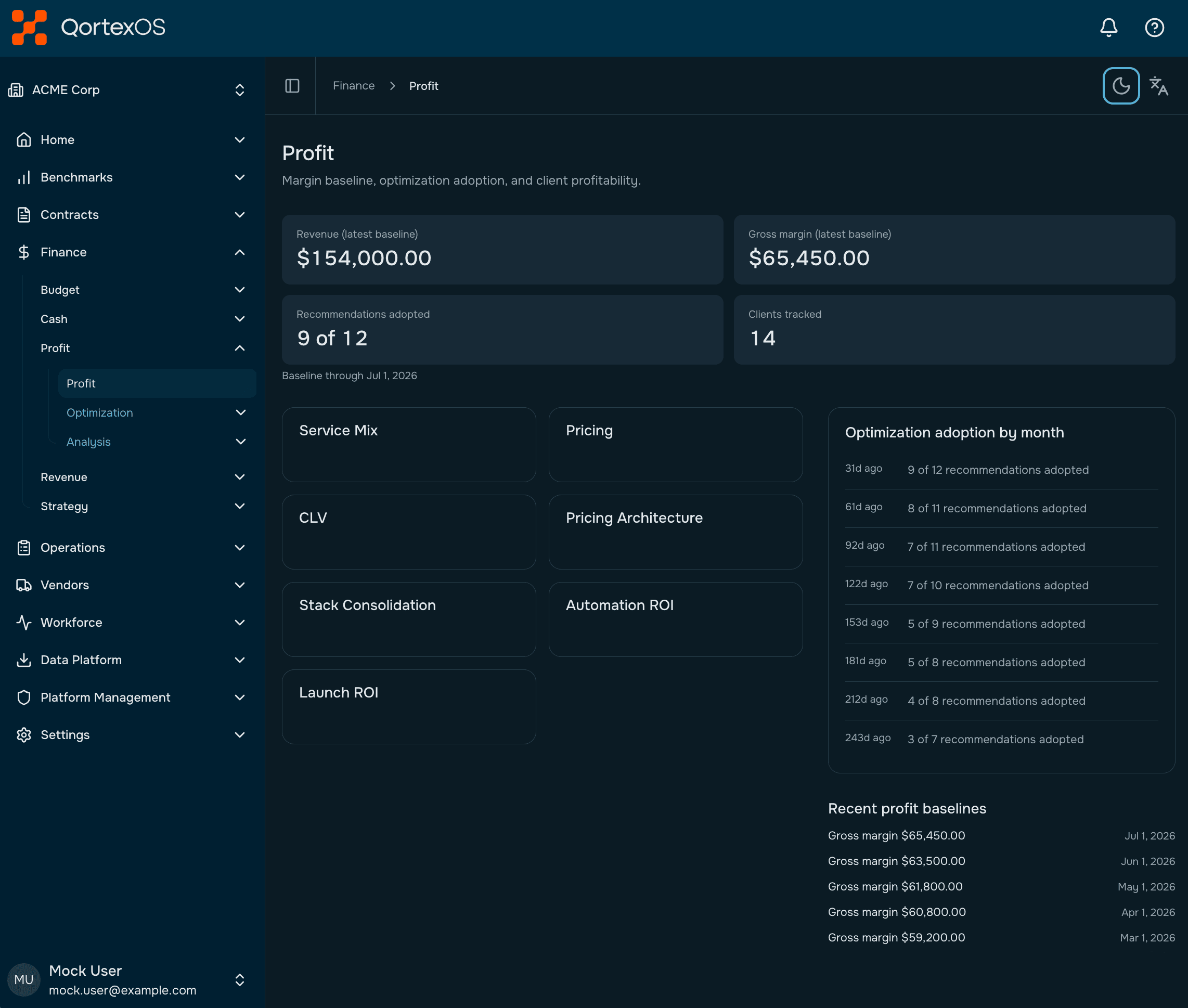
Reviews That End In Decisions
For most finance teams the work is scattered by default: several sources reconciled by hand, gaps you can measure but not yet explain, and corrections reached only after the window to make them has closed. Bringing the numbers into one trustworthy picture changes what a review produces. Instead of debating whose file is right, the team spends the meeting on the decision, on what moved, why it moved, and which corrections still have room to work.
- Reviews spent on the decision, not on reconciling the numbers
- One picture the whole team can trust and act from
- Corrections reached while there is still room to make them